






BGA and QFP at Home 1 - A Practical Guide.
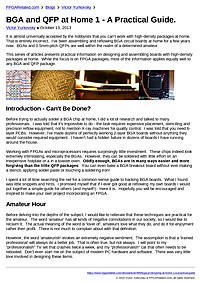
It is almost universally accepted by the hobbyists that you can't work with high-density packages at home. That is entirely incorrect. I've been assembling and reflowing BGA circuit boards at home for a few years now. BGAs and...

Summary
This blog documents a hands-on account of assembling and reflowing BGA and QFP boards at home, dispelling the myth that high-density packages are inaccessible to hobbyists. Readers will learn practical techniques, tooling choices, and inspection/debug methods to successfully solder BGAs and fine-pitch QFPs for FPGA and PCB prototyping.
Key Takeaways
- Identify suitable tools and consumables (stencils, solder paste, flux, hotplate/reflow options) for home BGA/QFP assembly.
- Prepare PCB and components with proper stencil, paste deposit, and alignment practices to minimize defects.
- Assemble and reflow BGAs and QFPs using controlled heating techniques and recommended temperature profiles.
- Inspect and diagnose common soldering defects using visual methods and simple X-ray/continuity techniques, and rework when necessary.
- Optimize yield through iterative profiling, proper board design practices (land patterns, thermal reliefs), and handling tips.
Who Should Read This
Intermediate hobbyists or hardware engineers with basic soldering experience who want to assemble BGAs/QFPs at home for FPGA or PCB prototyping projects.
Still RelevantIntermediate
Related Documents
- Architecture of FPGAs and CPLDs: A Tutorial Still RelevantIntermediate
- Physical Synthesis Toolkit for Area and Power Optimization on FPGAs Still RelevantAdvanced
- Performance driven FPGA design with an ASIC perspective Still RelevantAdvanced
- Implementing video compression algorithms on reconfigurable devices Still RelevantAdvanced
- Free Range VHDL Still RelevantIntermediate