









FPGARelated.com
Books

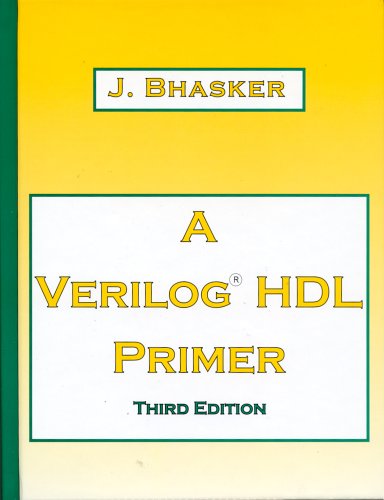
A Verilog Hdl Primer

Bhasker, J. 2005

- Written for new users. - Explains the language through simple examples. - Explains the syntax of language using commonly-used design terminology. - Explains the behavioral style, the dataflow style, and structural style in detail. - Concepts of delay and timing are clearly explained. - Testbench writing is made easier by providing a number of examples. - Many hardware modeling examples have also been provided to make this an excellent reference.

Also includes exercises for every chapter and expanded coverage of more language features including test bench writing strategies.

Third edition is based on IEEE Verilog 2001 Standard. It includes explanations of all the new features introduced in this version of the language, with examples.


Why Read This Book

You should read this book if you want a concise, example-heavy introduction to Verilog that makes language rules and common design idioms easy to grasp. It walks you from basic lexical elements and operators through behavioral/dataflow/structural coding styles, timing semantics, and practical testbench techniques so you can start writing and simulating real HDL quickly.

Who Will Benefit

Novice digital designers, FPGA engineers, and students who need a practical, hands-on introduction to writing synthesizable Verilog and basic testbenches.

Level: Beginner — Prerequisites: Basic digital logic concepts (gates, flip-flops, combinational vs sequential logic) and familiarity with programming fundamentals (variables, control flow).

Get This Book

Key Takeaways

  • Write synthesizable Verilog using behavioral, dataflow, and structural styles.
  • Model and reason about timing, delays, and simulation semantics vs. synthesis constraints.
  • Create practical testbenches and stimulus to verify RTL modules.
  • Use IEEE-2001 Verilog features such as generate constructs, signed arithmetic, and multi-dimensional constructs.
  • Translate common hardware blocks (counters, ALUs, FIFOs) into RTL modules.
  • Apply basic synthesis guidelines to make designs FPGA-friendly.

Topics Covered

  1. Introduction to Verilog and design flow
  2. Lexical conventions, data types, and operators
  3. Gate-level modeling and primitives
  4. Dataflow modeling
  5. Behavioral modeling (always blocks, blocking/nonblocking assignments)
  6. Structural modeling and module instantiation
  7. Timing, delays, and event control
  8. Tasks, functions, and procedural constructs
  9. Generate constructs, parameters, and arrays
  10. Testbench techniques and stimulus generation
  11. Synthesis considerations and coding guidelines
  12. Design examples and hardware modeling patterns
  13. Exercises, references, and appendices

Languages, Platforms & Tools

VerilogModelSim (simulators)Synopsys VCS (simulators)Synplify / FPGA synthesis tools

How It Compares

Similar in intent to Samir Palnitkar's 'Verilog HDL' as a beginner-friendly guide, but Bhasker's Primer is slightly more example-driven and focused on practical testbench and timing explanations; for modern verification features, consult SystemVerilog-focused texts.

Related Books