









FPGARelated.com
Books

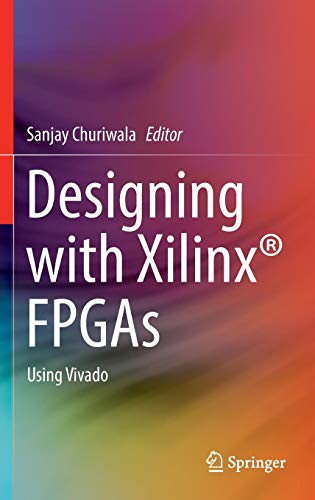
Designing with Xilinx® FPGAs: Using Vivado

2016

This book helps readers to implement their designs on Xilinx® FPGAs. The authors demonstrate how to get the greatest impact from using the Vivado® Design Suite, which delivers a SoC-strength, IP-centric and system-centric, next generation development environment that has been built from the ground up to address the productivity bottlenecks in system-level integration and implementation. This book is a hands-on guide for both users who are new to FPGA designs, as well as those currently using the legacy Xilinx tool set (ISE) but are now moving to Vivado. Throughout the presentation, the authors focus on key concepts, major mechanisms for design entry, and methods to realize the most efficient implementation of the target design, with the least number of iterations.



Why Read This Book

You will learn how to take a hardware idea from HDL or high-level C/C++ through Vivado’s IP-centric flow to a working design on Xilinx FPGAs, with practical advice to reduce iterations and improve implementation quality. The book emphasizes hands-on examples, migration tips from the legacy ISE toolset, and real techniques for timing closure, debugging, and using Vivado HLS and IP Integrator effectively.

Who Will Benefit

FPGA and digital design engineers or advanced students with basic HDL knowledge who need to become productive with the Vivado Design Suite and deploy efficient designs on Xilinx FPGAs.

Level: Intermediate — Prerequisites: Basic digital logic and HDL familiarity (Verilog or VHDL), understanding of synthesis and place-and-route concepts; basic familiarity with command-line and Windows or Linux environments. Knowledge of C/C++ is helpful for Vivado HLS sections.

Get This Book

Key Takeaways

  • Use Vivado to create, manage, and implement IP-centric FPGA designs from block diagrams and HDL.
  • Migrate legacy ISE projects to Vivado and translate constraints and flows with minimal rework.
  • Apply timing-driven synthesis, floorplanning, and constraint techniques (XDC) to reach timing closure.
  • Integrate, simulate, and debug designs using Vivado Simulator, the Integrated Logic Analyzer (ILA), and hardware debug flows.
  • Leverage Vivado HLS to convert C/C++ kernels into synthesizable RTL and integrate HLS IP into system designs.
  • Deploy designs on Xilinx platforms (including Zynq SoC) and use SDK/workflows for embedded software integration.

Topics Covered

  1. Introduction to FPGAs and Xilinx Device Families
  2. Overview of the Vivado Design Suite and Toolflow
  3. Design Entry: Verilog, VHDL, and SystemVerilog Workflows
  4. IP-Based Design and Block Design with IP Integrator
  5. Synthesis, Implementation, and Timing-Driven Optimization
  6. Constraints Management: XDCs, Timing Exceptions, and Floorplanning
  7. Simulation and Verification: Vivado Simulator and Testbenches
  8. Hardware Debug: JTAG, ILA, Chipscope-like Techniques
  9. Vivado HLS: High-Level Synthesis Workflow and Integration
  10. Embedded Systems: Zynq, MicroBlaze, and SDK Integration
  11. Partial Reconfiguration and Reconfigurable System Design
  12. Migrating from ISE to Vivado: Practical Tips and Pitfalls
  13. Design Optimization: Power, Area, and Performance Trade-offs
  14. Board-Level Flow, Bitstream Generation, and Programming
  15. Appendices: Common TCL Commands, Example Projects, Reference Tables

Languages, Platforms & Tools

VerilogVHDLSystemVerilogC/C++ (for Vivado HLS)TCL (for scripting Vivado)Xilinx Spartan/Artix/Kintex/Virtex familiesXilinx Zynq SoCXilinx UltraScale / UltraScale+Common Xilinx development boardsVivado Design Suite (IDE and Vivado Tcl Shell)Vivado HLSXilinx SDKVivado SimulatorIntegrated Logic Analyzer (ILA)ISE (migration reference)ModelSim/other third-party simulators (discussed)

How It Compares

Covers Vivado-focused, hands-on workflows similar to Xilinx's own documentation but organized as a tutorial; compared to Pong P. Chu's FPGA Prototyping series, this book emphasizes the Vivado toolchain and IP-centric/system-level flows rather than beginner HDL-first exercises.

Related Books