









FPGARelated.com
Books

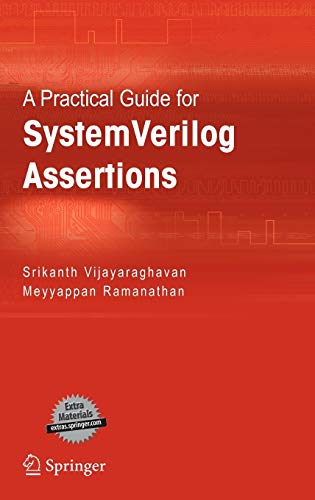
A Practical Guide for SystemVerilog Assertions

Srikanth Vijayaraghavan 2005

SystemVerilog language consists of three categories of features -- Design, Assertions and Testbench.  Assertions add a whole new dimension to the ASIC verification process.   Engineers are used to writing testbenches in verilog that help verify their design.  Verilog is a procedural language and is very limited in capabilities to handle the complex ASICs built today.  SystemVerilog assertions (SVA) is a declarative language.  The temporal nature of the language provides excellent control over time and allows mulitple processes to execute simultaneously.  This provides the engineers a very strong tool to solve their verification problems.  The language is still new and the thinking is very different from the user's perspective when compared to standard verilog language.  There is not enough expertise or intellectual property available as of today in the field.  While the language has been defined very well, there is no practical guide that shows how to use the language to solve real verification problems.  This book is a practical guide that will help people to understand this new language and adopt assertion based verification methodology quickly.


Why Read This Book

You should read this book if you want a compact, example-driven guide to writing and applying SystemVerilog Assertions in real verification scenarios. It walks you through the language constructs, temporal reasoning, and integration strategies that make assertion-based verification practical on ASIC and FPGA projects.

Who Will Benefit

Verification engineers and RTL designers with some HDL/testbench experience who need to adopt assertion-based verification or improve their SVA skills.

Level: Intermediate — Prerequisites: Familiarity with Verilog/SystemVerilog basics, digital logic design concepts, and basic testbench/simulation workflows.

Get This Book

Key Takeaways

  • Understand SVA syntax and core temporal operators (->, ##, through, etc.) and how they differ from procedural constructs.
  • Write sequences and properties to express common timing and functional checks for RTL modules.
  • Integrate concurrent and immediate assertions into simulation testbenches for active checking and debugging.
  • Apply assertion-based coverage and use assertions to drive debug and localization of functional bugs.
  • Use SVA with industry simulators and understand common pitfalls, synthesis considerations, and tool interoperability.
  • Adopt assertion-driven verification practices and combine assertions with other verification constructs (checks, assume/cover).

Topics Covered

  1. Introduction: Role of Assertions in Verification
  2. Overview of SystemVerilog Assertion Concepts
  3. Basic SVA Syntax and Expression Forms
  4. Sequences and Temporal Operators
  5. Properties: Combinational and Temporal Properties
  6. Concurrent vs Immediate Assertions
  7. Assertions in Testbenches and Simulation Integration
  8. Functional Coverage and Assertion-based Coverage
  9. Debugging, Reporting, and Best Practices
  10. Tool Support, Synthesis Considerations, and Case Studies
  11. Appendices: SVA Reference and Example Library

Languages, Platforms & Tools

SystemVerilogVerilogGeneral ASIC/FPGA flows (vendor-agnostic)ModelSim/QuestaSimSynopsys VCSCadence Incisive/XceliumGeneral HDL simulators and assertion checkers

How It Compares

More narrowly focused on SVA than broader texts like Chris Spear's "SystemVerilog for Verification," offering more hands-on SVA recipes while Spear covers testbench features and verification methodology more broadly.

Related Books