






Are you kidding me?

If I understand the blog entry [1] correctly, it's saying the industry is ready for high level synthesis (HLS), well almost. The blog states, the higher abstraction level will be achieved via C/C++/SystemC (the C-centric flows). A quote from the blog.
... getting close, and one of the biggest hurdles still to overcome is the skill set -- the combination of hardware design expertise and C++ -- ...
C/C++/SystemC, are you kidding...
A Bit Bucket had Holes
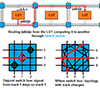
Couple months ago I wrote a quick little blog about a company called Tabula. Tabula has a virtual 3D approach to achieving higher logic density in an FPGA. See the previous blog for more information.
Along similar lines was another company called TierLogic which actually had multiple physical layers. I was impressed with the Tabula approach and claims. Along the same lines the TierLogic technology looked promising as well. But, EE Times has reported that...
Are you kidding me?
If I understand the blog entry [1] correctly, it's saying the industry is ready for high level synthesis (HLS), well almost. The blog states, the higher abstraction level will be achieved via C/C++/SystemC (the C-centric flows). A quote from the blog.
... getting close, and one of the biggest hurdles still to overcome is the skill set -- the combination of hardware design expertise and C++ -- ...
C/C++/SystemC, are you kidding...
A Bit Bucket had Holes
Couple months ago I wrote a quick little blog about a company called Tabula. Tabula has a virtual 3D approach to achieving higher logic density in an FPGA. See the previous blog for more information.
Along similar lines was another company called TierLogic which actually had multiple physical layers. I was impressed with the Tabula approach and claims. Along the same lines the TierLogic technology looked promising as well. But, EE Times has reported that...
Are you kidding me?
If I understand the blog entry [1] correctly, it's saying the industry is ready for high level synthesis (HLS), well almost. The blog states, the higher abstraction level will be achieved via C/C++/SystemC (the C-centric flows). A quote from the blog.
... getting close, and one of the biggest hurdles still to overcome is the skill set -- the combination of hardware design expertise and C++ -- ...
C/C++/SystemC, are you kidding...
A Bit Bucket had Holes
Couple months ago I wrote a quick little blog about a company called Tabula. Tabula has a virtual 3D approach to achieving higher logic density in an FPGA. See the previous blog for more information.
Along similar lines was another company called TierLogic which actually had multiple physical layers. I was impressed with the Tabula approach and claims. Along the same lines the TierLogic technology looked promising as well. But, EE Times has reported that...